Saturday, October 3, 2020

What do I really need these days?


These are hard times. It feels like we are nearing the end of something. 

A global pandemic, racial injustice, civil unrest, political cat fights every day on the news, . . . .

I am running out of normal words to describe 2020.  What else can be said? 

"Unprecedented" is what I keep saying over and over and over.

A curious thing is that in the middle of this uncertainty -- where none of us have been before -- there is still a preponderance of voices claiming mostly to have the answer.  Just follow the science, just follow this conspiracy video, just get rid of Trump, just re-elect him, just get another Conservative onto the Supreme Court, just stay out of those Democratic-run cities, just take back the Senate, just stay inside, just wear a mask, just chill !

We humans aren't so great at uncertainty are we.

Ever wonder how dictators rise, they offer certainty in a time of uncertainty. We will do crazy things when we feel uncertain. 

I used to think faith was about feeling certain. People with faith are those people without any doubts, right?  A wise man once helped me see that faith actually feels more like uncertainty than certainty.  When you feel certain about things, life is sort of a calm, progression of logical steps. Things are just obvious and you don't have any real strong feeling.   Faith is much more wild than that. Faith is deciding you are going to go with something even though you have very little external proof in its efficacy.  The feeling that accompanies faith then is queasier than I had thought.  When you are uncertain about something, but you decide anyway, and take one step in that direction., then, just after you take that step you get a little knot in your stomach, but you take another step, and you feel the knot again, that's what faith feels like. 

Certainty in 2020 is an illusion.  How can you really know how things are going to turn out?  How can you know precisely how to respond to a pandemic this world has never seen before?  How can you know how the racial tensions will play out? Will violence cross your path? Certainty, my friend, is not something anyone has right now, so why are we buying it?  If someone tries to sell you a mini-van that can fly to Mars, you wouldn't buy it.  You may want it to work, but you don't buy it because humans have not figured that trip out yet.

So next time someone tries to sell you the snake oil of certainty in the middle of 2020, just walk the other direction into uncertainty, and you just might find what you really need in times like this -- faith.

Wednesday, October 23, 2019

Big Apples Don't Cry

Its been 15 years since I made NYC my home.  I believed then -- and still believe -- it is the greatest city in the world.  The energy is palpable.  "The lights will inspire you," as the song goes.  Since roughly a third of the residents were born in another country, I feel like the immigrant spirit full of hope and optimism is still alive and well. It's what brought me here.  It's what keeps me here.

But lately I have been noticing something.  We don't know how to grieve here.  We like to "send our condolences to the family of the deceased," but just as quickly we say meaningless things like "I just try not to think about it" or "he wouldn't want us to be sad."  And that's not the worst.

The real vacuum of grief can be seen after the more subtle tragedies.  When is the last time you saw candles lit in the street for someone whose spouse cheated on them? When have you seen a vigil for those that are missing their home country?  When have you seen a special service held at a house of worship for all those that lost jobs in a corporate restructure? What about a wake for the family who lost a son to mental illness? Where does a teen go to recover from yet another "stop and frisk" incident which if not handled well could have been life threatening?


We have no words for these things here? "Bereavement leave" doesn't apply to these things. Instead we get angry and march and sue and fight.  There certainly is a place for anger and action, but nothing can suffice for the healing silence of grieving in a safe space. 

Contrary to the tough stereo-type, New Yorkers are hurting. Did you know we have more suicides here than homicides?  The numbers shocked me.*  We never talk about suicide here.  I am a Social Worker at an organization run by Social Workers, but even we don't talk about suicide.  Its as if New Yorkers are not afraid of anything except prolonged grief. We quickly cover things, and so there is a crusty attitude that forms in our heart over all that mess.

And I get it.  Much of the cover up is necessary for survival. If you listen to the stories, you quickly understand. It is actually a form of white privilege for me to sit here and suggest that people stop and grieve. Who has that kind of margin? When you are working and going to school while raising three kids as a single parent, you don't have time to grieve.  If the tears start flowing, will they ever stop?  If you are in the shelter, undocumented, work below minimum wage and still send a third of your salary back to your home country because you are the "rich family member that made it to America," how will you have time to stop and grieve?  Reality bites, and there is no time to stop and heal the wound.

We are also intoxicated with optimism.  To grieve, is to question the optimism that keeps us going.
People come to NYC to make it big.  In my own way, I suppose I did too.  We are so convinced that we will "make it" if we try a little harder. We love phrases like "believe in yourself" and "just stay away from the haters."  In churches, this thinking is sometimes called faith.  The image is reinforced as we daily walk past, $20 Million penthouses in Tiribeca or $300 hand bags on 5th Ave. The images of "success" are all around us.  As much as we hate Trump, he is a true New Yorker in so many ways -- addicted to the image of success.

I have no solutions here. I am just wanting to help break the silence, the silence we cover with noise. Somehow, we have got to create spaces to grieve.

Maybe we could start with the immigrant experience.  No matter how much we love our lives here, don't we all feel the loss of the places we left?  Don't we all believe that NYC is not quite what we hoped it would be?  Are these not almost universal losses carried by all New Yorkers?  Could we acknowledge that at least?

Could faith communities be the space for this?  Tragically, many use religion to avoid grief.  The faith rhetoric is a thinly veiled version of the American dream.  "Just believe it and you can do it."  That is not the model I see in our Creator who came to die.  If He wept and died and calls us to die, wouldn't that mean at least that we are not afraid of the same feelings.  Maybe the promise of His resurrection could give us courage to go deep into the realities of our losses and the losses of those around us.

I think it could. The caver with the strongest rope can descend into the lowest crevices.  Religion if it means anything, I think it is that it is okay to grieve.  "Blessed are they that mourn," Jesus said.  I think this is true even if all we have to spare is a New York minute.

Who knows? Maybe it would take the edge off that crusty New York attitude as well.

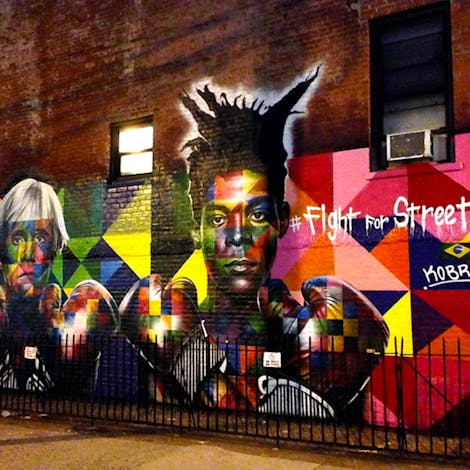
I included a few graffiti murals here because they show more than words can.


graffiti2


Image result for bushwick mural

 Image result for bushwick mural

Image result for bushwick mural

Image result for mural in east williamsburg


Image result for mural in east williamsburg

Image result for mural in east williamsburg


Related image
Image result for mural in east williamsburg


Related image

Image result for mural in east williamsburg

The promise of Easter is that we can be kids like this, crying/smiling in the rain.

Image result for mural in east williamsburg

* https://www.villagevoice.com/2016/09/15/report-suicides-surpass-homicides-in-nyc/


Tuesday, July 30, 2019

What does white privilege look like? (3 stories from my life)

Related image

"I'll take it without a bag." I said as I bought a snack at the corner grocery store.  The picture of the island of plastics in the Pacific Ocean has been getting to me, so I have been trying to cut down on unnecessary plastic.  I grabbed my Arizona Green Tea and headed out the door.  How easily I had saved the world the burden of disposing of a piece of plastic, a process that could take hundreds of years I am told.  Why doesn't everyone do this?  Then I looked around, and thought for a second.  What would happen if the young men of color in my job development program would choose this option?  Immediately it clicked.  There is no way in a million years they would want to walk out of a convenience store with anything not in a shopping bag. The optics of that could be dangerous.  If police would happen to be there, there is a good possibility they would be questioned or worse.  Its just not something you do if you are a young man of color.

It got me thinking about the relationship betwen white privilege and moral superiority.  I felt like I was doing the right thing, and for a second this satisfaction was making me feel a step above, but . . . white privilege was making it all possible.

It happened again the other day.  There was an incident at one of our internship sites.  Two customers got into an argument that escalated into an altercation.  Our participant, a young man of color, tried to break up the fight and got physically involved. As I was hearing about it, I thought immediately, "Noooooooooo."   I knew where the story was headed.  The security guards at the site responded and our young person was implicated along with the two who were fighting.  He was trying to do a good thing but lost his job because of it.

How would that have been different for me?  If I was in that situation, hopefully I would have done the exact same thing.  As with him, safety would have been my concern; losing my job would not have been.  Why is it that our young men of color have to be taught not to help break up a fight?  I, on the other hand, would have been considered a hero.

Allow me one more story, I like to run the Brooklyn Half Marathon each year.  People like the notion of a middle-aged guy staying healthy, raising money for the poor urban community of Cypress Hills. Then yesterday, I worked all day in the backyard doing normal stuff, setting a few stones for a patio, painting a chair, trimming the rose bushes, basic manual labor. At the end of the day, I was beat.  I was not interested in doing a training run for a half marathon.  Then I thought of the two men who pick up my trash each Tuesday and Friday, and the thousands of sanitation workers in this city, many who are middle aged men of color.  Every single day, they put in a day of physical work like I did yesterday, more physically rigorous actually.  They are not going to be using their evenings to train and run a half marathon for charity.  Yet I am the one lauded for fitness and overall good will.  They are no doubt much more fit and doing a more needed service.  What value is there really in running 13.1 miles when a train would easily get you there?

Why do I share these stories?  Who knows? but I wonder if one of the ways white privilege persists and remains invisible to us White folk is that it doesn't present itself like we think.  When I hear the word white privilege, my initial picture is a smiling Southern belle sipping sweet tea.  In reality, it is much more subtle, and often comes with a self-rewarding hint of moral superiority. I wonder what the rest of you think.     


Sunday, July 21, 2019

What if grace applied to corporate sin?


Have you ever been engaged in a discussion on racism that degenerated?  What starts as a vulnerable and productive process ends in hurt feelings and more rigidity. What starts as bridge-building ends with a widening chasm. 

I have been there.  

"Why are you trying to create division? Its time to move on" people tell me. My heart weakens.  Division is the last think I am trying to create!  

This is usually followed by some snarky comment from me about "White fragility," and a deep freeze settles in. Like Elsa in the movie "Frozen" something inside of us says, "Let it go, let it go, the cold never bothered me anyway," and we build our ice castles.

So the question I ask myself is, "What better option could there be?"  Might the Gospel actually provide a different path.  Is there something about the Gospel that empowers me to engage in ever deeper ways. Is there a theological framework to think about race that energizes me as a White Christian for the difficult conversations and gives me hope for better living in this racially charged world? 

I think there is.

Here are some pieces of a theological framework I am finding helpful. 

1. Sin can be corporate or systemic in addition to the individual acts we normally think of. As a White person, it is easy to get stuck on this point.  "I don't hate Black people. I don't cause mass incarceration or discrimination in hiring today? How can you somehow implicate me in racism?"  This represents a very Western view of sin.  We forget that the Bible is full of examples of systemic sin. All through the O.T. the prophets railed against the sin of this group of people or that nation. Jesus did it too. He calls out a couple of Galilean towns for their sin (Matthew 11:21) and weeps over Jerusalem (Matthew 23:37).  

2. Sin is also generational. Have you heard this exasperated declaration from White folk? "Slavery was a long time ago. Jim Crow was over before I was born. Why are we still talking about racism?"  We forget that there is an element of sin that is generational.  We are less than three generations from a campaign of terror in this country. On average there was one lynching a week for 80 years. The psychological trauma of this sort of intimidation is hard to comprehend. God said that he visits sin up to three or four generations (Exodus 34:7). And have you heard of the story of the Amlakites(I Samuel 30:1-2)?  Its a hard story for me to read, but the implication is clear.  This is a group of people that sinned once and were judged some 400 years later. This is evident in the New Testament as well.  Romans 5 goes to some length to talk about how Adam's sin was passed down to us. Could it be that specifc sins are passed down as well?  I find quite a bit of evidence for generational sin by looking at genetic studies. "Family studies that include identical twins, fraternal twins, adoptees, and siblings suggest that as much as half of a person’s risk of becoming addicted to nicotine, alcohol, or other drugs depends on his or her genetic makeup"    (https://www.drugabuse.gov/publications/drugfacts/genetics-epigenetics-addictionis).  Feel free to do the research on your own, but my recollection from my Social Work education is that a great many social vices follow generational patterns, so why not racism?  You may have heard of the nature vs. nurture debate about whether behaviors are taught from one generation to the next or whether they are influenced by genetics. My hunch is that there is a little of both. In either case, sin follows groups of people for generations. Why would racism and its effects be any different?  

We may like the famous line, "I am the master of my fate: I am the captain of my soul," but the Bible seems to say that we are born into streams of generational sin. Its a paradox, but past sin is present. This is probably a topic for a longer discussion, but I suggest to you that at the very least my fathers' sins are my unique temptations.  Sins against my fathers, are my unique vulnerabilities. 

3.  Self-justification is a dead-end street. Universal sin is stated in the most graphic of terms in the Bible.

"As it is written:
“There is no one righteous, not even one;
     there is no one who understands;
    there is no one who seeks God.

All have turned away,

    they have together become worthless;
there is no one who does good,
    not even one.”[b]
 “Their throats are open graves;
    their tongues practice deceit.”[c]
“The poison of vipers is on their lips.”[d]
     “Their mouths are full of cursing and bitterness.”[e]
 “Their feet are swift to shed blood;
     ruin and misery mark their ways,
 and the way of peace they do not know.”[fRomans 3:10-17).
And John says it straight up, "If we claim to be without sin, we deceive ourselves and the truth is not in us." (I John 1:8).  

Practically speaking, if you try to say that you are a good person because of the virtue of your race, we have a bit of trouble, mostly because every race has a lot of flaws and historical evil. . 

4. It may be that these first three points are a bit depressing -- sin is systemic, sin is generational, self-justification is a dead end street -- but here's the good news. .  

First, a bit of background. One of the problems with discussing generational or systemic sin is because we feel some responsibility, but don't know how to deal with it.  We know how to address our individual sin, but how do you find redemption for sins that I didn't commit? We, therefore, avoid conversations about race because we think it is a dead end street to perennial guilt filled with grief and shame.  It feels counter-productive.  Naturally, we then build all kinds of defenses or rationales to silence the issue and make it go away.

But acknowledgement of sin, doesn't have to be a dead end street. It can lead to redemption and freedom instead.  

While grief over sin for the Christian may be perennial, guilt and shame are not.  The Gospel releases us from these things and gives us the power to grieve and really listen to our brothers.  This is not a dead-end road.  I have found it to be highly productive and energizing. Sugar-coating the truth, ignoring facts, having to convince everyone of your position is the dead-end road. Repenting of the sin of our culture and generations leads to freedom.

This freedom from guilt and shame is available to us simply as a gift called grace.  This grace is not only for our individual stuff, but also for the systemic and generational stuff as well.  

Genesis 19 tells the famous story of God's corporate judgment on Sodom and Gomorrah, but did you ever stop to think about God's bargain with Abraham?  God is willing to spare the entire city if as many as 10 righteous folks are found. Beautifully, the individual repentance of a few results in a sort of corporate redemption.  A similar example occurs when Israel was facing judgment.  God was threatening to judge them because they had deliberately and emphatically walked away from his care by worshiping their own golden calf.   Because of Moses' prayer and willingness to face the consequences of the corporate sin of Israel, the systemic judgment doesn't fall (Exodus 32:32).  Similarly, Daniel prays for his sin and the sin of "his people." (Daniel 9:1-19).  This approach seems instinctual for Isaiah when he cries out, 

“Woe to me!” I cried. “I am ruined! For I am a man of unclean lips, and I live among a people of unclean lips, and my eyes have seen the King,the Lord Almighty.” (Isaiah 6:5)

The pattern is incredibly beautiful. People of God identified with the sin of their people and through their act of solidarity, humility, and repentance, God's judgment was spared. These heros identified the sins of their tribe as their own and repented of it and found grace.

This is, of course, precisely what Jesus did when he became one of us, identified with all our stuff and embraced the consequences for our hate. "For as in Adam all die, so in Christ all will be made alive" (I Corinthians 15:22). 

As I identify with the sins of my own White race, redemption comes, and oh how sweet it is!  


I struggle with words to describe how amazing this has been in my life. Tears come as I write.  When we repent as a member of our race, good things happen. I dare you to pray this, "I am a racist, and I am part of a country that has always been deeply racist. Lord, have mercy on us sinners."   I don't completely understand it theologically, but I have found freedom in that sort of prayer and energy for the struggle. It is hard work to have to defend your people and your race. Freedom comes when you fully accept all of your systemic and generational identity and let it all go at the same time. Try it, perhaps an angel will come and put a searing hot coal on your lips, but you will never be the same.  The American or Canadian or ethnic Mennonite in me is transformed in that moment, and I am raised up as part of the kaleidoscope of God's redeemed kingdom -- a beautiful multi-color kingdom that retains its diversity into eternity (Revelation 7:9).

There is no more need to justify any of my sins -- individual, systemic or generational. You can say many things about me or my race that grieve me; indeed I have already grieved many times over my sin and the sin of my people and will continue, but it is not a depressing pointless grief. Its a sweet, empowering grief, because the greater my sin, the greater God's grace, and the greater his grace, the more power I have for action. 


So is it easy to talk about racism as a White person?  Of course not, it is hard for me to think about belonging to a race that has caused much pain for about 400 years. It is harder still to discover ways that I struggle to love my neighbor today, but God has grace for it all!  Here's a verse I like.

“My grace is sufficient for you, for my power is made perfect in weakness. Therefore I will boast all the more gladly about my weaknesses, so that Christ’s power may rest on me. That is why, for Christ’s sake, I delight in weaknesses, . . . For when I am weak, then I am strong." (2 Corinthians 12:9-10)

In this experience of repentance, grief, and grace, I die and am raised again with new power to be a strong aly as a White person in the struggle against evil in all its forms. I highly recommend this grace. 


Wednesday, June 19, 2019

Why do 25,000 normal-looking people run to the point of exhaustion?

It's 6:15 am, the air is crisp, the glow of a sunrise is stretching across the sky, and a crowd is gathering. They are pacing, stretching, or munching -- no doubt the odd remnants of a well-planned nutrition regimen.  They are dressed in all sorts of ridiculous outfits that you normally would not wear in public.  Many are chatting excitedly like elementary kids before a pageant. But they are not kids, these are adults, 25,000 of them to be exact, who have paid good money to run their guts out for 13.1 miles.  I am among them, and I can't help but think, "Why do we do this?"

I have heard it said, "Americans nowadays are lazy." Its hard to "get people to do things." As a non-profit leader, I am always trying to get people to do things, donate money, work hard, attend workshops, enroll in training, etc. etc., and it is not easy.  We add all sorts of incentives, work the networks, craft our pitch, and maybe we get 100 or so if we are lucky. Churches are the same way.  We have full time staff dedicated to recruitment and they struggle to fill 50 seats on a Sunday morning.

But here I am, with 25,000 New Yorkers, who are volunteering their time, making great physical sacrifice, committing to months of training, getting up early, giving every muscle in their bodies in search of a little medal that has almost no monetary value.  How can we make sense of it? Are Americans really lazy, or are they hungry for something we are not giving?

Since I am one of these 25,000, I asked myself that question. Why am I participating in this arbitrary and odd social phenomena?  What am I hungry for?

1. Difficulty. It is seen as a hard thing.  One sign I read among the cheering crowd said this, "If it were easy, we would be doing it."  Doing something hard makes us feel good.  To put everything you have on the line is a sort of spiritual experience that I can't quite explain, but I know it is real.  We are hungry for something that requires a lot of us. 

2. Community. There is a close community of support.  When you talk to another runner, there is instantly a bond and plenty to talk about.  The vibe is always positive.  Rarely if ever have I encountered another runner who made me feel like my target time was pathetically slow.  You might compare target paces but it is not really a competition with others it is a competition with yourself, and there is nothing but positivity toward each other as runners.

3. Care for the body.  We are obsessed with health and fitness.  This certainly is part of the equation, but there are quite a few easier ways to achieve our fitness goals.  So, I make this a minor point.  Still there is something meaningful about listening to your body and caring for it.  Something inside tells us we were made for  care and dominion over physical obstacles. 

4. Clarity. My generation has been hurt by post-modernism and self-esteem trophies.  We have been pummeled with the message, "Just be yourself, just be happy," and that is something hard to achieve when everything around seems underwhelming.  A race, however, is primal and clear.  It is 13.1 miles not 13.  There is a precise start line, ending line and route. We can see exactly how fast we ran, and we know exactly if it was faster or slower than last time.  The clarity of a race is psychologically soothing in its own way.

5. Inclusion. My generation has been hurt by modernism also.  In spite of the move toward inclusion and acceptance, the world still pretty much operates on a survival of the fittest mentality in the tradition of modernism. Regardless of the sector, there are constant rankings and comparison.  There is a top 10 list in almost anything you can imagine. On this race, there may be competition toward the front of the pack, but for the most part the focus is on supporting each other.  The goal is to finish well, not necessarily to beat the next guy.

6. Assurance. Finishing is a given.  Even though I always desperately want to quite.  I have never quit mid-race. I have slowed to a walk, but the idea of actually not making it never really seems like an option.  I have a bib number.  I have sponsors. I have the shirt. One way or another I am sure that I will cross the line.  There is no real doubt.

7. Reward. It may only be a piece of plastic with a ribbon, a bag of refueling treats, a little after-party and a selfie, but finishing a race is like no other feeling in the world. What felt like it would never end is suddenly over. The eternity of steps between me and the finish line all of a sudden blurs into one little experience.

So there you have it. A few simple concepts, but they go deep, and when you experience them like I have over and over again in my body, well, you just sign up again.  If I can sum it up, its like the race offers a story to be in.  It reminds me that I was not made for the sidelines. I was made to be included in the company of the finishers.

The race feels like a microcosm of life, a little model of what life was meant to be.  Difficulty, Community, Care for the Body, Clarity, Inclusion, Assurance, Reward, maybe this is what we were meant for.  What would happen if our real lives had more of these things?  What would happen if our Faith included more of this?  I am not sure, but we just might wake up at 5 am, just so we don't miss something.


Wednesday, June 5, 2019

What kind of good deeds are good?

In the Book of Matthew in the Bible, Jesus tells a bizarre story of judgment day at the end of time.

Folks are divided into two groups, the sheep and goats.  The "sheep" are said to have fed, clothed, visited Jesus himself and the "goats" are said to have ignored him. I have always thought of this story as a firm warning to be sure that you feed, clothe, and visit people or you might get the axe on judgment day.  That is certainly the most obvious point, but the other day I noticed how strikingly confused both groups were  The goats are incredulous.  "When did we not do all those things to you?"  The sheep are similarly confused. "When did we do all those good things to you?"

There is an irony in goodness.  It is not well-suited to measurement and verification.  Even those doing good are confused about the relative value of what they are doing.

Like so many of Jesus teachings, He seems to be trying to confuse the score keepers.  We want to measure our good deeds against our bad and make sure we are on the positive side of average at least. We are very invested in keeping score even it is sub-consciously.  Have we made it?  Are we winning or loosing?  Jesus throws this line of thinking on its head.  Most people who are good don't even know where they have been good.  It appears to happen almost by accident.

Similarly, I have often found that my most loving deeds are mostly done for wrong reasons.  I want to be noticed, recognized or at least thanked.  If nothing else, I want the satisfaction of feeling I had made a difference.  As the saying goes, I want something to "justify my existence." It seems the true sheep barely noticed when they had done something good or at least did not see the great significance in it.  Perhaps that's because it wasn't about being noticed in the first place.  It was just more of a spontaneous action springing from feeling accepted.  The goats on the other hand were disappointed to discover that the "castles built on sand" were all washed away.

This is not an isolated teaching.  Other Scriptures talk about the importance of your good deeds being done in secret (Luke 17:10, Matthew 6:3).  Its as if Jesus knew that self-satisfaction would drive many good deeds.

What is the way out of this dilemma?   Picture yourself in a moment when you were most in love.  What did you act like during those times?  You probably opened the door for random strangers.  Maybe you tipped better or stopped to pet a dog during your commute.  When a person is overwhelmed with love, the goodness just sort of randomly flows out in all directions -- not in a clear transactional or strategic way.  Certainly, you don't keep score. Thomas Merton just said it so well, "The root of Christian love is not the will to love, but the faith to believe that one is loved."

Forgive me if I sound harsh, but doing good for any other reason is an elaborate psychological mechanism to use the less fortunate to feel better about myself. I am sorry to say I know what I am talking about on this.  I am an expert at it actually, but this is not the way of the sheep. 


Monday, July 30, 2018

What do you do when life doesn't turn out the way you planned? (A fable of three voices).

Final exams were done.  It was finally summer vacation, the end of my sophomore year of college and I was finished.  It was one of those years that all students would like to put behind them. My impeccable grades came crashing down.  I needed 300 hours for my internship, but I couldn't find my time sheets, so I only had 220.  My girl friend broke up with me.  She said that I wasn't focused.  She needed a man that she could trust to provide for her and be the spiritual leader. My dad had a stroke and moved down to Virginia to be closer to his family.

With no real place to go or thing to do, I decided to empty out my checking account and grab a couple of credit cards and head for the open road.  Hitch hiking out west had always been my dream and this was the only thing I could think of doing.

The first ride I got was from a nice gentleman in a respectable sedan.  

"Where you headed?"  

"Portland, OR" I said as if I actually had a destination set. 

"I am headed to Lincoln, Nebraska for the National Bar Association Convention. You can ride with me that far if you like."

"Thanks . . ."

"Call me Vinny," he interrupted.

"Great," I thought to myself.  This is going to be easier than I thought.

Over the next 400 miles, we got to talking about my year.  How I felt like nothing went right, how my dreams about college and marriage had all kind of fizzled.

"That's horrible," the gentleman said, "you are a fine young man -- articulate, smart, insightful. You would make a great attorney.  To be honest, I think that college screwed you over.  You should write a complaint to the American College Liberties Union."

"Honestly?" I said strangely encouraged.

"Yeah, and that girlfriend, you could tell her a thing or two.  My ex-wife was like that, always a load of unrealistic expectations.  You can definitely do better.  You really just need to stand up for yourself.  The world is yours for the taking."

"Nice guy," I thought as he dropped me off at the hostel just outside Lincoln. "He made some good points."

The next day, was one of those clear, summer days you dream about during mid-terms in March.  Clear, 80 degrees, nice breeze.  I smiled as I slid into my seat at a truck stop.  "I will take the Hungry Man's breakfast, I said to the waitress."  Her name tag read, "Charlotte." 
She looked like she may have been working there for 40 years or so. 


"You really should think about the vegetarian omlet," she suggested. "I see men come in here all the time and order that Hungry Man's breakfast but they go waddling out like they are 6 months pregnant  -- all that sugar and fat in their gut."

"Uh, sure," I said, taken aback a little.  I knew she was right.  I feel horrible when I eat sugar for breakfast.

"Where you headed?" Charlotte added when she brought back the omelet.

"Oh, I don't know.  Far away from Expectation University that's for sure."

"You can't run from things, you know.  That's all millennials do nowadays.  I have a grandson who has gone to three different colleges and hasn't graduated from any of them. Now he signed up for some kind of Peace Corps thing.  He's trying to change the world, but he can't even change himself."

"Uh, . . . " I didn't really know what to say.

She brought a refill for my coffee and kept going on like some kind of antique wind up toy, "I think men really have issues with commitment these days.  Whatever happened to love?  You know the kind of love that is steady and strong and not distracted by the Miss Universe contestants.  If men really knew how to love, we wouldn't have all these fatherless children and mothers on welfare."

Thankfully she got distracted by some new customers.  "I think I like Vinny better,"  I muttered to myself.

For some reason that day, people were not noticing hitch hikers.  By 11 am it was 85 degrees and, I just gave up putting my hand out and just walked beside the highway.  The words of Charlotte kept playing through my head.  Maybe she is right. Maybe I am just like every other millennial out there, rootless, unfocused, unable to commit to anything. If I could just get organized, I could make it, but it never happens that way.  I start a new plan, and it just ends up not working out.  The last words my girlfriend said came back to me, "I just need someone who knows what they believe and where they are going in life.  I am sure you will find someone else." I guess idealism doesn't mean much when you never finish a book or stick to something longer than a few months.

About 4 pm, I heard a rattly, clunking noise behind me.  I turned to see a Ford pickup -- maybe from the early 80's.   It sounded like it hadn't received an oil change since 91.

"Where you headed?" a raspy voice said from the driver side through the open passenger  window.

"I don't know," came from my mouth -- the first honest thing I said since I left that pristine university campus.

"Hop in" the old man said.

I am not sure how it happened, but as we clunked down the road I told the old man everything.  How I had always wanted to do something great.  How I was the first in my family to go to college, but I was failing out.  How I wanted to make my dad proud, but I couldn't forget the time I overheard him talking to his buddies about me,  how I should go to college because I couldn't put a nut on a bolt without stripping it.  I told him how I used to run down to the river and watch the leaves fall from the trees and go floating on down to the little log jam where they all got stuck.  I told him how excited I was to join that presidential campaign last year.  I was sure we would really make this country better.  Maybe I could get a job in government after that. Finally, this country would be a place of fairness and peace.  I would have been a real part of it!  I told him how alive I felt when I started dating.  How amazed I was when she said, "yes," and I had a real girlfriend!  How I wasn't sure what had happened.  How I felt like rolling my eyes at every professor as they went on and on about the amazing properties of such and such when all I could think about was that I had no property at all. I spoke about how I dreamed of being a great father and how everything went wrong over Christmas break, how my girlfriend said an abortion was the only real option.  Guess I am not "real" then.

After about 6 hours of this, we pulled off the highway and took a couple of streets and then entered a long winding gravel lane.  Not sure why, but I didn't ask where we were going.  I didn't much care. Eventually, we started to climb up a long hill and turned the corner to a rocky ridge then into a little clearing in the trees.  We came to a stop in front of a beat-up house trailer nestled in the tall grass. A make-shift porch swing sat out front just where one could see back down the hill.  The wooded valley stretched out below.  "I'll be right back," the old man said as I settled into the porch swing.  Moments later he came out with a couple of cold Pepsi's and some left over potato salad with two forks stuck into the deli container.  "Hungry?" he said.  "Sure," as I took a fork and began eating out of the container.

"You are a wanderer," the old man began. "I was too once.  I have children in Vermont that don't care about me. I worked in investment banking for twenty years.  My wife said our kids needed fresh air.  All I could see was the next payout.  She got her fresh air all right.  It just didn't include me.  I began to self-medicate.  I had a doctor friend who was a client.  I did his finances, and he would write me prescriptions.  Pretty good deal we had going.  'Till the night my body couldn't take it anymore.  I ended up in the ambulance driving up the West Side.  That's the last thing I remember."

"I woke up the next week with nothing.  As soon as I could walk, I took a flight to Boise and haven't been back since.  That was 30 years ago."

I listened in silence as I ate the last of the potato salad.

"You know, 'Not all who wander are lost.'" he added. "Truth is you are all those things that Charlotte said, and more. You thought you could do it all and be it all.  You can't. I thought I could, but I found out the truth the hard way.  Big surprise, I know, but you aren't all those things you wanted to be.  Honestly, you sounded a bit grandiose. And isn't it true that you also tried to mold your girlfriend into your image.  She didn't fit your fantasy.  No wonder she couldn't trust you. All of those things are true, I can't sugar-coat it for you.  

"This may come as a surprise, but I know your father.  He and I were buddies back in Vietnam.  He knew you were heading out this way and gave me a call.  He said that you have always had a special place in his heart.  There was this sparkle that he never quite understood, but he knew it was the seed of greatness.  He is actually in a nursing home in Virginia now.  He said you never call him, so I don't expect you to know that, but he watches your posts every morning on Facebook.  They are the highlight of his day.  He said that he still can see the sparkle, and he knows there is important work for you to do somewhere."

I couple tears softly dripped into the empty potato salad container on my lap.  The sun had slipped behind the horizon in the valley.  What else could I say?

"Yes, I am a broken, directionless, accomplish-less man," that is true, but somehow I also felt like I had made it home.  How could it be that my father still loved me and was paying attention to my life?  Could it be that I really have a good future?

As I lay awake on the couch that night it occurred to me that I had been given three choices, three voices, vindication, shame, and brokenness.


Vindication says ...

If only the world would discover my talents.
If only she would know how much she hurt me.
If only, they would say sorry.
If only people would know the truth about what happened.
If only the guilty would pay.
If only I could start over, I could make it work if I had another chance.

Shame says ...

There is no hope for vindication.
It would be better if I disappear.
My voice doesn't matter.
My only hope is to escape, far far away.

Brokeness says ...

Its actually much worse than I even thought. 
Not only am I bad but I have done many things good with wrong motives.
Vindication is unrealistic in this life and wouldn't heal me anyway.
Shamful withdrawal into the safe shadows is not safe.
There is no redemption short of exposure.

Why are you surprised by your inability to make life work?
Why do you think failure is final?
There is healing.
There is nothing to hide.
There is forgiveness.
You are loved.
You are free.

I drifted off in a peaceful sleep. For some reason, making it to Portland didn't seem very important any more.

Here's a song I like.

Tuesday, July 4, 2017

Is there no balm in Gilead?


There is a question that I keep coming back to. Is there balm in Gilead? The question comes from the ancient Hebrew prophet, Jeremiah, sometimes known as the "weeping prophet." In chapter 8 of the book that bares his name he says,

"Since my people are crushed, 
    I am crushed;
I mourn, and horror grips me.
Is there no balm in Gilead?
Is there no physician there?
Why then is there no healing
   for the wound of my people?"

I ask the question because I really want to know. Is there a path to healing? Is there a road to redemption? In the middle of not meeting expectations, is there a way forward, or is there just a "well, you should have known better." 

From Washington, to Syria, to Cypress Hills, to my church, to my family, -- the world feels like it is full of open wounds. I am guessing you have some wounds of your own, and do you ever find that your efforts to right the wrongs only cause more wrongs? Trying to fix  things often makes things worse.  You try to have that critical conversation, but it goes bad. Is there truly any balm in Gilead?  Is there no physician here? 

As any good Christian, I can give you the right answer. I can quote the four laws or some rote prayer about justification and sanctification, but at times it doesn't compute. It sounds like the same "try harder" message.  Throughout my adult life I have often felt like a sharecropper sitting in the decrepit, "for coloreds only" section of a pristine Southern Baptist church in the 1880's. The theological words about Jesus don't add up. Regardless of what you say, I am pretty sure that if the White, American Jesus you are talking about showed up here he wouldn't like me.   

Often the wound is denied or covered with superficial words.  Earlier in the same chapter, Jeremiah writes,

"They dress the wound of my people as though it were not serious.
'Peace, peace,' they say, when there is no peace."

What we need is not just more nice words or positive thoughts.  What I long for is true salve for the wounds of me and my people.  The world seems to be run by "eye for an eye" folk.  I am afraid as the saying goes, "soon we will all be blind." It happened again yesterday at work.  I was trying to facilitate reconciliation between staff on an issue.  One said, "Well, when you act right, I will act right."  This is not balm that we need.

Gilead was in Israel. "God's people" lived there. It was the holy land, a politically weak nation for most of its history but a place that was suppose to be a "blessing to all nations."  Soon after Jeremiah wrote those words, the land was conquered.  The people were taken to a foreign land.  One of them was a promising young man named Daniel.  He was neutered and forced to serve a pagan king all his life. In his elderly years, he was faced with one last test, a death threat actually.  Would he face Jerusalem and pray out of his open window or would he hide and live?  He chose to pray.

It struck me that Gilead as he knew it didn't exist by that time. If he was asked, "Is there balm in Gilead?" I think he would have said, "There is no Gilead. There is no temple, there are no priests, there is no country, but . . . there is a balm, so I will still pray." 

We think people and institutions should persist. When you are a child, you think your parents will last forever.  You expect your church to stay the same. You expect your friends to remain. You expect that people you look up to continue to live up to those expectations.  You expect your house to still be there when you get home. You expect your job to last. On this fourth of July, I think many of us expect America to last indefinitely.  It won't. 

This last week one of my favorite "institutions" crumbled.  What I thought was an invincible fortress -- gone.  

Through the tears, while I was sifting among the ashes, I heard a still small voice, clear and unshakable.  It was the kind of voice that speaks words that are truer than everything you see and touch. It said, 

"There is no more Gilead, but, yes, there is a balm."

Here's a video of a song I like on this theme.

https://www.youtube.com/watch?v=8fcMxI_6xsk


Saturday, June 3, 2017

What is wrong with the world?

I used to think the world, the flesh, and the Devil were more or less synonyms. I used to think all the dimensions of evil could be captured in one photo of a Las Vegas crime scene.  You have the scantily clad ladies, the casino owner with a big cigar, and a couple of pimps in the shadows.  There you have it. That's evil.

This view of evil is clear. It is also convenient because all you have to do to avoid evil is stay off the strip.  One simple rule fixes it all.

But the other day I was thinking about an old cliche I used to hear in sermons, "the world as referenced in the Bible is the world system."  That never made much sense to me.  What exactly is the world system?  Is it the Vegas strip or is it something far more subtle?

For the last thirteen years, I have spent my life deep in the world system. My profession and the profession of my closest associates is to look deeply at the problems in the world and try to fix them. Solutions are offered that involve politics, business, churches, neighbors, anyone at all. We try to pull it all together and make the "system better."  So what is this world system that is so bad?

This is what I see.  Everyone trying to make rules for other people, so things can be better.  We call it a lot of other things -- clear expectations, best practices, protocol, policies and procedures, and they are all so good but they are often built on the core worldly notion that there is clear cause and effect, and I can reduce what is expected of me to simple behaviors that I can achieve. If I can just get everyone else to follow, things will be better  --and I will consequently be on top because I picked rules I can follow.

It happens in subtle ways.  Every time I go to Manhattan to one of the city or state offices, I hear some semi-frustrated Quality Assurance Officer say, "I need you to tell your staff to get me a copy of Form 2393439 on time! It will make your program better." Hmmm

Whenever there is a crisis -- like a shooting or robbery, I hear the chorus of protocol lovers.  We need to have more policies and procedures.  There certainly is a place for preparation and clarity, but what I really sense is that we want a system of rules that will save us.  Last week a 15 year old came with a loaded gun to one of my sights where we have English classes.  Fortunately, no one was hurt, but it wasn't the policy and procedure manual that saved us that day.  It was good people doing good things -- compassion mixed with courage.

I used to hear it preached that the world is lawless, but I see quite the opposite.  The world system is brimming full of laws. Everyone's got an expectation for everyone else. There is a rule or policy for everything, and everyone is slightly frustrated that others won't listen.  It is morphing into a giant, global murmur of "should's"

At work, we are trying to make Fulton St. a more inviting beautiful place to be.  Some of the merchants purchased beautiful new awnings and signs.  They were promptly fined by the city and forced to take them down because they did not have the proper permit and somehow did not meet the specifications.  The sign can't hang over the sidewalk more than 4 feet!  Apparently, 5 feet would create a safety hazard (eye rolling).

The tactic is not new.  Job's friends were men of the world system.  If you do X, then Y will happen.  Period. So stop doing X, Job, that's all there is to it. God provides an air-tight system of rules and rewards.  Sowing and reaping is all there is to it. What a convenient world view.

This view is very useful and seductive because it is partly true.  With the cause and effect world view, you can do a lot of things.

You can put people in their place.
You can clearly identify who is in and who is out.  
You can make the world more predictable.
You can blame the victim for their own problems. (i.e. people begging are lazy)
You can blame the victim for your own problems.  Like my neighbor who won't let his kids play with Spanish kids.

If life runs on a clear cause and effect rubric, a system of levers and buttons, you can be in control.
You don't have to be dependent on anyone else's good graces.
You can get what you deserve.
You can be sure of a good outcome.
You can be successful.
No need to be poor in spirit, meek, mournful, or hungry.  All you need is discipline and clear commitment to the cause and effect principles in God's Word.  You can be in the driver seat of your own faith. 

You can also make yourself feel like you are actually fixing things -- like you are bringing much needed law and order.  We even call Job's friends "comforters."

Job instead cries out for a mediator to plead his case in the heavenlies.  Isaiah pleads that God would rend the heavens and come down. The Israelites gratefully looked to the serpant on a pole.  Salvation doesn't come from protocol. 

"In repentance and rest is your salvation" (Isaiah 30:15).

"So God did what the law could not do. He sent his own Son in a body like the bodies we sinners have. And in that body God declared an end to sin's control over us by giving his Son as a sacrifice for our sins." (Romans 8:3b) NLT


"Is There Hope for a Politically Fractured Body?" What I learned from listening.

  This isn't the blog post I thought I would write.  Sometime in the wee hours of election night, I had a thought.  I really need to tal...